For businesses across Chicagoland and the North Shore, physical security is no longer just about locks and cameras—it’s about understanding risk, reducing liability, and protecting people, property, and operations. A professional physical security assessment provides the clarity organizations need to make smart, defensible security decisions.
If you’ve never gone through a formal assessment before, this guide walks through what to expect, why it matters, and how the process supports long-term security planning.
What Is a Physical Security Assessment?
A physical security assessment is a structured evaluation of how well a facility is protected against threats such as theft, violence, unauthorized access, and operational disruption. It examines the real-world effectiveness of security measures—not just whether they exist, but whether they work as intended.
Assessments often serve as the foundation for broader physical security consulting, helping organizations move from reactive fixes to proactive risk management.
Why Chicagoland and North Shore Businesses Face Unique Risks
The Chicagoland region presents a wide range of security challenges. Dense commercial corridors, suburban office parks, healthcare facilities, schools, and mixed-use developments all experience different threat profiles. Proximity to major transportation routes, workforce volume, and public accessibility can significantly increase exposure.
A professional assessment accounts for:
-
Location-specific crime patterns
-
Facility type and daily occupancy levels
-
Public-facing vs. restricted-access operations
-
Regulatory, insurance, and liability considerations
Rather than applying a one-size-fits-all solution, assessments align security strategy with how your organization actually operates.
What a Professional Assessment Typically Includes
While no two facilities are identical, most high-quality assessments follow a structured methodology. A formal physical security assessment commonly includes the following components.
Site and Perimeter Evaluation
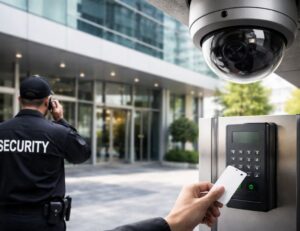
This phase examines how people and vehicles approach and enter the property. It may include parking areas, exterior lighting, access points, signage, fencing, and natural surveillance.
Access Control and Interior Security
Evaluators review doors, credentialing systems, visitor management, restricted areas, and internal movement patterns. The goal is to understand where unauthorized access could realistically occur.
Security Technology Review
Cameras, alarms, monitoring systems, and communication tools are assessed for coverage, placement, maintenance, and effectiveness—not just whether they are installed.
Policies, Procedures, and Training
Physical security is only as strong as the people implementing it. Many assessments tie directly into security training services to identify gaps in staff awareness, response protocols, and emergency preparedness.
The Role of Threat and Vulnerability Analysis
An assessment doesn’t assume every risk is equally likely. Instead, it evaluates:
-
Credible threats based on location and industry
-
Vulnerabilities that could be exploited
-
Potential consequences if a security failure occurs
This approach helps leadership prioritize investments and avoid overspending on low-impact risks while overlooking critical weaknesses.
Deliverables You Should Expect After the Assessment
A professional assessment should result in clear, actionable outputs—not vague observations. Most organizations receive:
-
A written report outlining findings and vulnerabilities
-
Risk-ranked recommendations
-
Short-term and long-term improvement strategies
-
Documentation that supports insurance, legal, or compliance needs
In some cases, assessments also support litigation or regulatory matters, aligning with services such as expert witness testimony when security decisions are later scrutinized.
How Assessments Support Long-Term Security Strategy
For many organizations, a physical security assessment is the starting point—not the end. The findings often guide:
-
Capital planning for security upgrades
-
Policy development and staff training
-
Executive decision-making and board reporting
-
Ongoing consulting and program management
Firms that offer integrated services can help translate assessment findings into sustainable, real-world improvements rather than isolated fixes.
Choosing the Right Security Partner
Experience matters in physical security. Look for professionals with real-world backgrounds, multidisciplinary expertise, and leadership-level insight. Reviewing a firm’s credentials, leadership team, and approach—such as those outlined on an About page—can help ensure you’re working with advisors, not just vendors.
Many organizations also value consultants who regularly deliver physical security presentations and training, as this reflects depth of knowledge and the ability to communicate complex risks clearly.
When It’s Time to Schedule an Assessment
If your facility has never undergone a formal assessment—or if operations, staffing, or location conditions have changed—it may be time to take a closer look. Proactive evaluations help reduce surprises, improve readiness, and demonstrate due diligence.
Businesses ready to explore next steps can start by reviewing available assessment and consulting options or reaching out directly through the firm’s contact page to discuss scope and timing.
TL;DR / Key Takeaways
-
Physical security assessments identify real-world risks, not just theoretical issues
-
Chicagoland and North Shore businesses face diverse, location-specific threats
-
A strong assessment evaluates perimeter, interior security, technology, and people
-
Clear deliverables support smarter investments and liability protection
-
Assessments often serve as the foundation for long-term security strategy