If you’re responsible for protecting a facility, one question should always be top of mind: How easy is it for someone to exploit our weaknesses?
At JG Good Corporation, we help organizations answer that question every day. One of the most effective strategies we implement is target hardening—a proactive approach that makes your business a far less attractive and accessible target.
In this guide, we’ll break down what target hardening is, why it matters, and how we help businesses apply it in real-world environments.
What Is Target Hardening?
Target hardening is the process of strengthening a facility’s physical security measures to deter, delay, and detect threats.
Instead of reacting to incidents, target hardening focuses on prevention by making it significantly more difficult for unauthorized individuals to gain access or cause harm.
At JG Good Corporation, we integrate target hardening into our broader physical security consulting services to create layered, effective protection strategies.
Why Target Hardening Matters for Businesses
Criminals and bad actors often look for the path of least resistance. If your facility appears vulnerable, it becomes a more likely target.
Target hardening helps you:
-
Deter potential threats before they act
-
Delay intrusion attempts to allow response time
-
Reduce the likelihood of successful incidents
-
Protect employees, assets, and operations
Through our physical security assessment services, we identify where your current setup may fall short—and where hardening efforts will have the greatest impact.
Key Components of Target Hardening
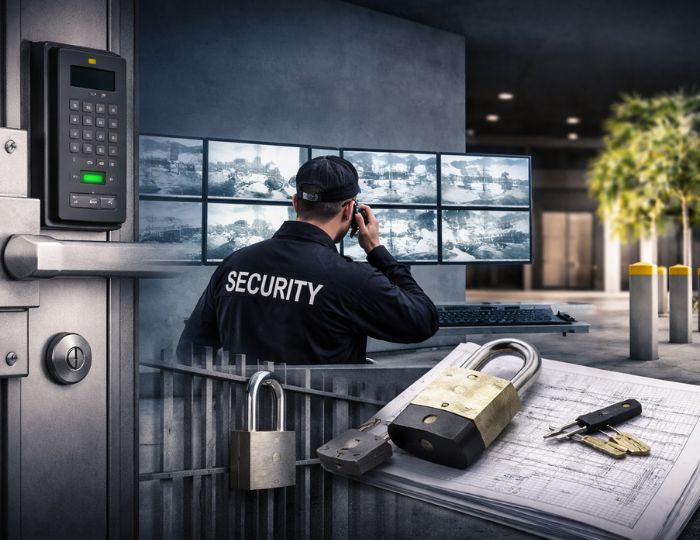
Effective target hardening isn’t about one solution—it’s about layers.
Access Control Enhancements
Controlling who enters your facility is the foundation of security.
We often recommend:
-
Secure entry points with credential-based access
-
Visitor management protocols
-
Restricted access to sensitive areas
These strategies are often supported by our broader security consulting approach, ensuring they align with your operations.
Surveillance and Monitoring
Visibility is critical.
Properly placed and monitored surveillance systems:
-
Deter criminal activity
-
Provide real-time awareness
-
Support investigations if incidents occur
However, effectiveness depends on placement, coverage, and active monitoring—not just installation.
Physical Barriers and Design
Sometimes the simplest measures are the most effective.
Examples include:
-
Reinforced doors and locks
-
Perimeter fencing
-
Controlled parking and entry zones
Target hardening often involves evaluating how your physical environment either invites or resists intrusion.
The Role of Employee Awareness and Training
Technology alone isn’t enough.
Your team plays a critical role in maintaining security. Without proper awareness, even the best systems can fail.
That’s why JG Good Corporation incorporates security training services into many of our recommendations, ensuring employees understand:
-
Access protocols
-
Suspicious behavior indicators
-
Emergency response procedures
How JG Good Corporation Implements Target Hardening
At JG Good Corporation, we take a practical, real-world approach to target hardening.
Our process typically includes:
-
Comprehensive Assessment
We evaluate your current vulnerabilities through a detailed physical security assessment. -
Risk Prioritization
Not all vulnerabilities are equal. We focus on the areas with the highest impact. -
Strategic Recommendations
We provide clear, actionable steps to strengthen your defenses. -
Implementation Support
From planning to execution, we guide you through the process. -
Ongoing Evaluation
Security evolves, and so should your strategy.
We also provide physical security presentations to help organizations understand and sustain these improvements over time.
Where Target Hardening Has the Biggest Impact
Target hardening is valuable across industries, but especially critical for:
-
Commercial facilities and office buildings
-
Schools and public institutions
-
Event venues and high-traffic environments
-
Organizations managing sensitive data or assets
For example, businesses in areas like Glenview and Schaumburg often benefit from tailored strategies based on their specific risk profiles.
The Connection Between Target Hardening and Liability
Strong physical security isn’t just about prevention—it’s also about protection from legal risk.
If an incident occurs, organizations may need to demonstrate that reasonable measures were in place.
At JG Good Corporation, we support this through both proactive consulting and expert witness testimony, helping clarify whether appropriate security standards were followed.
Take a Proactive Approach to Security
Waiting for an incident is the most expensive way to manage risk.
Target hardening allows your organization to take control—reducing vulnerabilities, improving safety, and strengthening confidence across your operations.
At JG Good Corporation, we work closely with clients to design and implement practical, effective security strategies. If you’re ready to strengthen your defenses, start by exploring our target hardening services in Lake Forest or reach out through our contact page.
TL;DR / Key Takeaways
-
Target hardening focuses on deterring, delaying, and detecting threats
-
It involves layered security measures like access control, surveillance, and physical barriers
-
Employee training is essential for effective implementation
-
Proactive hardening reduces both security risks and legal exposure
-
JG Good Corporation provides tailored strategies to strengthen business security